
Mecca (Makkah) old map
You can find on this page the Mecca (Makkah) old map to print and to download in PDF. The Mecca (Makkah) historical map and the vintage map of Mecca (Makkah) present the past and evolutions of the city of Mecca (Makkah) in Saudi Arabia.
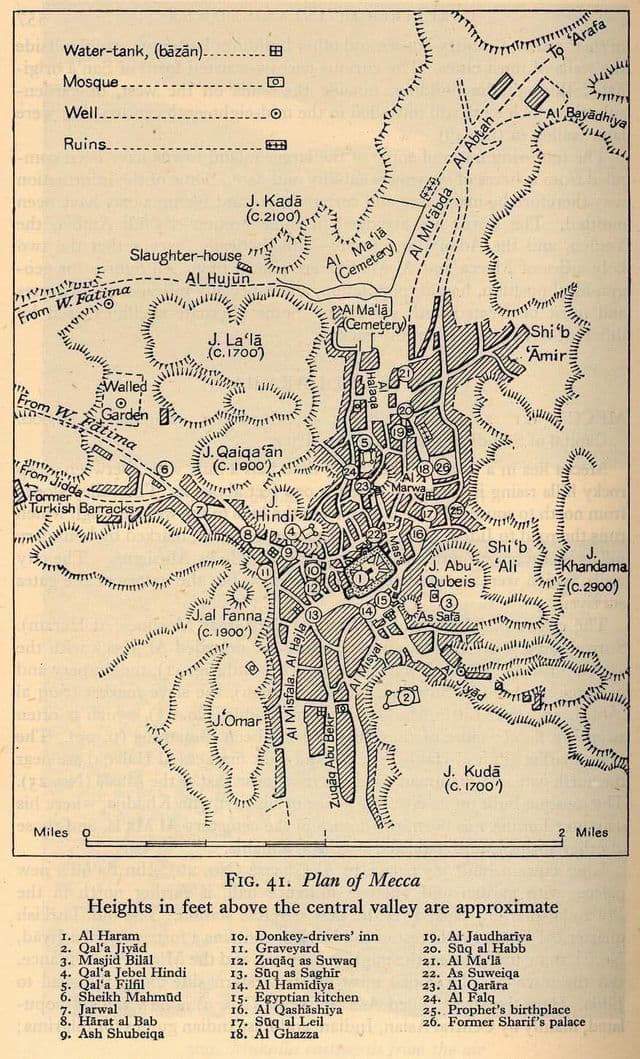
Mecca (Makkah) historical map
The Mecca (Makkah) old map shows evolutions of Mecca (Makkah) city. This historical map of Mecca (Makkah) will allow you to travel in the past and in the history of Mecca (Makkah) in Saudi Arabia. The Mecca (Makkah) ancient map is downloadable in PDF, printable and free.
The Greek historian Diodorus Siculus who flourished between 60 BCE and 30 BCE writes about the isolated region of Arabia in his work Bibliotheca historica describing a holy shrine that Muslims see as referring to the Kaaba at Mecca (Makkah) “And a temple has been set-up there , which is very holy and exceedingly revered by all Arabians “. The Ptolemymay have called the city “Macoraba”, though this identification is controversial. Some time in the 5th century CE, the Kaaba was a place of worship for the deities of Arabia pagan tribes as you can see in Mecca (Makkah) historical map. Mecca (Makkah) most important pagan deity was Hubal , which had been placed there by the ruling Quraysh tribe and remained until the 7th century CE. In the 5th century, the Quraysh took control of Mecca (Makkah), and became skilled merchants and traders. In the 6th century they joined the lucrative spice trade as well, since the historical battles in other parts of the world were causing trade routes to divert from the dangerous sea routes to the more secure overland routes.
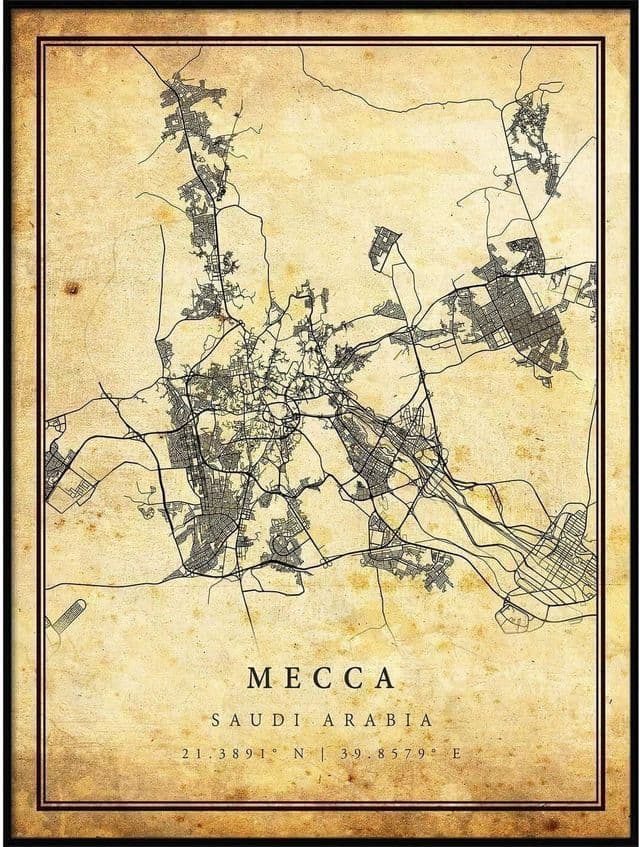
Mecca (Makkah) vintage map
The Mecca (Makkah) vintage map give a unique insight into the history and evolution of Mecca (Makkah) city. This vintage map of Mecca (Makkah) with its antique style will allow you to travel in the past of Mecca (Makkah) in Saudi Arabia. The Mecca (Makkah) vintage map is downloadable in PDF, printable and free.
Up to the 7th century, the journey of the annual pilgrimage was intended for religious reasons by the pagan Arabs to pay homage to their shrine, and to drink from the vintage Zamzam Well. However, it was also the time each year that disputes would be arbitrated, debts would be resolved, and trading would occur at Meccan fairs. These annual events gave the tribes a sense of common identity and made Mecca an important focus for the peninsula. Camel caravans, said to have first been used by Muhammad great-grandfather, were a major part of Mecca (Makkah) bustling economy. Alliances were struck between the merchants in Mecca (Makkah) and the local nomadic tribes, who would bring goods - leather, livestock, and metals mined in the local mountains - to Mecca (Makkah) to be loaded on the caravans and carried to cities in Syria and Iraq as you can see in Mecca (Makkah) vintage map. Historical accounts also provide some indication that goods from other continents may also have flowed through Mecca. Goods from Africa and the Far East passed through on route to Syria including spices, leather, medicine, cloth, and slaves; in return Mecca received money, weapons, cereals and wine, which in turn were distributed throughout Arabia.